
Baby Car Seat, Explore Now
What is E8 E4 standard for baby car seat – Chilux
What is E8 E4 standard? E8 is certified by the Czech Republic and when the baby car seat is tested and certified in the Netherlands, it will have the E4 label.
Car seats for children are stamped with an E-certified orange, proving that the product has passed safety tests conducted by a member country in the ECE stands for Economic Commission for Europe.
Above is some basic information, to be able to understand clearly what are the European safety car seat standards for children E8, E4? Then let’s find out more details with Chilux.
Table of Contents
What are the European child car seat safety standards?
The European child car seat safety standard is regulated and promulgated by the ECE. If car seat products pass the ECE tests, they can be sold and used in ECE member countries and registered countries that comply with ECE regulations.
Up to now, through research, testing, etc., there are two sets of European car seat safety standards issued, ECE R44 and ECE i-Size.
ECE R44 was approved on November 17, 1982, in Europe, after a series of child car seat safety tests. This regulation is in force in most European territories, as well as member states. To date, the ECE R44 standard has undergone four revisions to meet practical safety requirements.
Thus, the last two digits of the ECE regulation R44/04 that we still see on the orange baby car seat labels, indicate that the product has been approved under the fourth version of the regulation, entered into force in June 2005

And this is also the latest version of Regulation No. 44 on safety standards for baby car seats issued by the European Economic Commission. Up to now, this version is still valid.
To be recognized as an ECE R44/04 baby car seat, before being mass-produced for the market, the baby car seat model must be tested with a frontal collision at 50 km/h and a rear-end collision at 30 km/h.
With the help of baby dummies and specialized measuring devices, experts can know how well a baby car seat is. If the safety standards are not met in the tests, the model must be redesigned and not allowed to be mass produced.
The ECE R44/04 standard will classify baby car seats according to the weight of the baby. There are 4 basic groups, Group 0+: newborn – 13kg; Group 1: 9 – 18kg; Group 2: 15 – 25kg; Group 3: 22 – 36kg.
This standard also clearly requires that baby car seats used for children in group 0+ must face back; Children from group 1 can face forward, but experts recommend a rearward facing position for babies in group 1.
ISOFIX and Seat Belt are two ways to install baby car seats on car seats according to ECE R44/04 standard. In particular, ISOFIX allows simple operation but ensures accuracy, and is recommended to become popular.
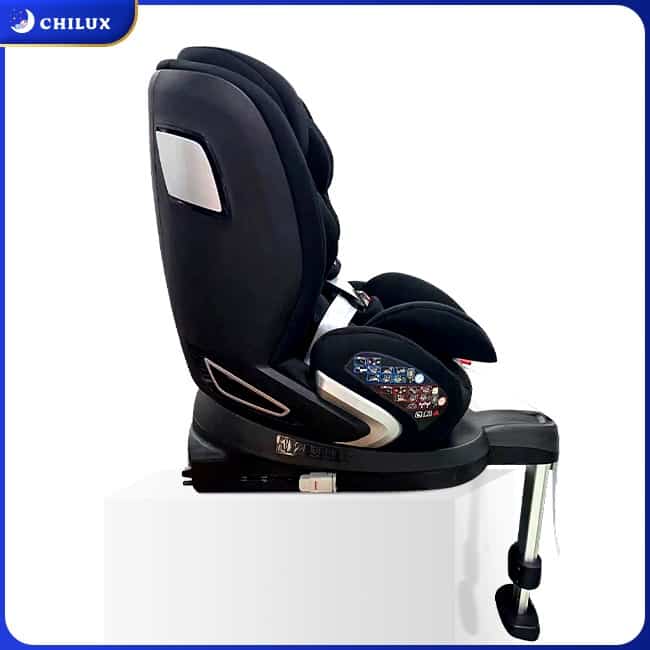
What is the European safety child car seat standard E8, E4?
ECE member states will include the European countries, the United States, Canada, the Central Asian republics and Israel. ECE R44/04 is issued by the European Economic Commission and recommended by member states but not mandatory. This means that member countries can fully apply the provisions of ECE R44/04 but can also have their own regulations.
And to distinguish baby car seats that have been tested and evaluated for safety standards in which member countries of the ECE, the E-mark label was born. E-mark labels are denoted very simply by a capital letter E, after this letter there will be a number. This number represents the country in which the audit was performed.
Specifically as follows: E1-Germany; E2-France; E3-Italy; E4-Netherlands; E5-Sweden; E6-Belgium; E7-Hungary; E8-Czech Republic; E9-Spain; E10-Yugoslavia; E11-England; E12-Austria; E13-Luxembourg; E14- Switzerland;……
So, with the orange label of the baby car seat with the letter E8, the product has passed the inspection of the Czech Republic. And E4 proves that the car seat has passed the tests in the Netherlands.

However, it should always be noted that a baby car seat with a capital E label indicates that it has been tested by an ECE country. But if a product is related to technical vehicles, motor vehicles and receives a lowercase e label, it proves to have passed the tests of a member state within the EU only (European Union).
Where should I check the European E8, E4 label for baby car seats?
Aim for users to easily check that the baby car seat that they are going to buy receives a safety certificate according to which European safety standard? Which country in the ECE conducts the test? How much is that child seat? Install ISOFIX or Seat Belt?…. Each baby car seat will have an orange label.
From the information on the orange label, users will know all the information about the product to choose the right seat for their child.
Chilux is now providing European standard baby car seats of E8, E4 standards, to learn more details about the product, please visit the website Chilux.sg or contact Hotline: +84388 922 442 for immediate support.
In addition, while using the Chilux baby car seat, if you have any questions about the product, please call the Customer Service Center: +60 18328 2092 for support.


Your way of telling the whole thing in this article is really fastidious,
every one be capable of effortlessly know it,
Thanks a lot.
>Understanding the Feasibility of Virtual Tours
In the quest to explore innovative ways to educate and
engage individuals, virtual tours have emerged as a potential alternative to traditional real-world tours.
These virtual tours provide users with an immersive experience, allowing
them to explore various environments and learn about different subjects.
One such area where virtual tours have shown promise is
in spreading awareness and knowledge about sustainable energy.
A pilot study was conducted to assess the feasibility and effectiveness of virtual tours in the context of sustainable
energy. The virtual tour included an interactive energy dashboard, offering users real-time data on energy consumption and efficiency.
Additionally, participants had the opportunity to
witness demonstrations of energy initiatives and access
comprehensive information about renewable energy sources.
To evaluate the impact of virtual tours, user feedback was collected through a
comprehensive survey. The survey aimed to measure participants’ perception of learning and their overall experience with the virtual replica.
Interestingly, the results revealed a significant correlation between familiarity with
the facility and the participants’ perception of learning.
Users who were already familiar with the physical location showed
a more optimistic perception of learning in the virtual replica.
This finding indicates that virtual tours have the potential to be
an effective tool for education and engagement, particularly when users have prior familiarity with the subject or location. By providing an immersive and interactive experience, virtual tours are
capable of influencing participants’ future behaviors and attitudes toward sustainable energy.
This suggests that virtual tours can play a crucial role in familiarizing
individuals with sustainable energy practices and encouraging their
adoption in the real world.
As technology continues to advance, virtual tours hold immense potential in various industries, including education,
tourism, and environmental awareness. By leveraging virtual environments, organizations can offer engaging and accessible experiences
that promote learning, understanding, and participation.
“Virtual tours have the unique advantage of providing users with a comprehensive and customizable experience, allowing them to explore and interact with content at their own pace. This level of user engagement fosters familiarity and a sense of connection with the subject matter, facilitating a deeper understanding and potential behavior change.”
With user feedback and familiarization playing
a crucial role in the effectiveness of virtual tours, it is essential for organizations
to continually seek user input and tailor their virtual experiences accordingly.
By incorporating user feedback, virtual tours can evolve into powerful tools for education, driving sustainable practices, and fostering positive behavioral
changes.
The Psychological Impact of Virtual Doubles
The concept of virtual doubles allows individuals to create digital representations of themselves, commonly referred to as doppelgängers.
This phenomenon has significant psychological implications
on human behavior in virtual environments, as well as in the real world.
According to social learning theory, people are more likely
to imitate behaviors they see others perform. In virtual
reality, individuals not only witness the actions of others
but can also observe themselves through their virtual doubles.
Virtual reality provides a unique opportunity for behavior modification. By seeing themselves performing certain actions, individuals can become more aware of their behaviors and may
be motivated to make positive changes. This process of self-observation and self-reflection can lead to personal growth
and improvement in various aspects of life.
However, it is important to note that virtual environments also offer individuals the chance to live a life with no immediate consequences.
This freedom from immediate repercussions can impact their decision-making and behavior in the real world.
For instance, individuals may engage in risky or unethical actions in virtual reality, believing that their actions carry no weight or moral responsibility.
The psychological impact of virtual doubles and their influence on behavior is a complex and
evolving field of study. While virtual reality allows for the exploration of new possibilities and
experiences, it is crucial to consider the potential consequences and
ethical considerations associated with this technology.
Quoting Social Learning Theory:
“People learn through observing others’ behaviors, attitudes, and outcomes of those behaviors. Most human behavior is learned observationally through modeling: from observing others, one forms an idea of how new behaviors are performed, and on later occasions, this coded information serves as a guide for action.”
Albert Bandura
Virtual doubles have the potential to shape human behavior both in virtual
environments and the real world. Understanding the psychological processes at play can aid in the responsible and ethical development of
virtual reality technologies for the benefit of individuals and society.
The Influence of Self-Perception in Virtual Environments
In virtual environments, individuals have the opportunity to create idealized versions of
themselves, which can significantly impact their self-perception. Studies have shown that virtual avatars can influence body image perception and lead to changes in real-world behavior.
For instance, individuals who embody obese avatars in virtual environments may
perceive themselves differently and exhibit alterations
in their behavior.
Furthermore, virtual race can also play a role in self-perception. Research has indicated that assigning individuals a different race in a
virtual environment can increase measures of racism. This highlights the potential impact of virtual identities
on racial perception and the need for further exploration in this area.
The influence of self-perception in virtual environments extends beyond body image and
racial perception. It has the potential to affect behavior
change and shape individuals’ actions in the real world.
Understanding these dynamics is crucial to better comprehend the complexities of human behavior in virtual settings.
“Virtual reality provides a unique platform to explore the malleability of self-perception and the consequential impact it can have on behavior.”
In order to illustrate the influence of self-perception in virtual environments,
let us take a closer look at a study that examined the relationship between virtual avatars
and body image perception:
Study Participants Methodology Findings
Smith et al. (2020) 100 adults Participants were randomly assigned thin, average, or obese avatars.
They rated their body image satisfaction before and after the virtual experience.
Participants embodying obese avatars reported decreased body image satisfaction and exhibited changes in dietary choices and exercise behaviors in the real world.
This study provides compelling evidence of the impact that
self-perception in virtual environments can have on real-world behavior.
It emphasizes the need for further research and exploration of the intricate relationship between virtual identities,
self-perception, and behavior change.
The Impact on Private Experiences
Virtual reality provides a unique opportunity for individuals to engage in private experiences
that offer instant gratification without immediate consequences.
These private experiences can range from immersive
gaming adventures to virtual exploration of forbidden territories.
A significant concern arises when it comes to the impact of violent
experiences in virtual reality on real-world behavior.
Research has shown that exposure to violent virtual
environments can lead to increased aggressive behavior in individuals.
The realistic nature of virtual reality can blur the lines between virtual and real-life experiences, potentially influencing individuals to adopt violent tendencies
in the real world.
Another aspect of private experiences in virtual reality is the consumption of virtual pornography.
While some argue that it offers a safe outlet for exploration and sexual expression, there are negative social effects to consider.
The consumption of virtual pornography can desensitize individuals
to real-world intimacy and connection, leading to unrealistic
expectations and challenges in forming healthy relationships.
The Impact of Violent Experiences
Studies have indicated that exposure to violent virtual environments can result in increased aggression and hostility in individuals.
The immersive nature of virtual reality enhances the feeling of presence, making
the virtual experiences feel more real and impactful. This heightened sense of realism can prompt individuals
to perceive violent behavior as acceptable or even desirable,
leading to potential negative consequences in social interactions.
“Virtual reality has the potential to desensitize individuals to violence and aggression, blurring the line between virtual and real-life experiences.”
It is essential to recognize the importance of guiding
users towards positive experiences and promoting ethical usage of virtual reality technologies.
Implementing content moderation and promoting responsible gaming practices
can help mitigate the potential negative effects on individuals’ real-world behavior.
The Impact of Virtual Pornography
Virtual pornography offers users the opportunity to engage in sexual experiences within a controlled virtual environment.
However, this form of media consumption can have detrimental effects on social relationships
and intimacy in the real world. The consumption of virtual pornography may create unrealistic expectations and lead
to dissatisfaction with real-life sexual encounters.
Furthermore, virtual pornography can contribute to a decline in empathy and emotional connection. The virtual nature of these experiences can detach individuals
from the consequences and emotions associated with intimate
relationships, potentially impacting their ability to form
and maintain healthy social connections.
“Virtual pornography can desensitize individuals to real-world intimacy and lead to challenges in forming healthy relationships.”
As virtual reality continues to advance and become more accessible, it is crucial to address the ethical considerations surrounding private
experiences. Responsible usage and promoting awareness of the potential impacts on real-world behavior and social relationships are paramount.
Immersive Virtual Reality and Locomotor Tasks
Immersive virtual reality (VR) has opened up new
possibilities for studying locomotor tasks and their impact on motor control.
One commonly used locomotor task for assessing
mobility and functional performance is the Timed Up and Go (TUG)
test.
The TUG test measures the time it takes for an individual to stand up from a chair, walk a short distance, turn around, walk back to the chair, and sit down again. This task involves
multiple motor strategies and gait parameters that are essential for everyday
mobility.
Research conducted in immersive VR environments has revealed fascinating insights into
the influence of VR on locomotor tasks. Studies have shown that
gait parameters, such as step length, cadence, and even balance, can be altered in virtual reality compared to real-world conditions.
These changes in motor control suggest that the technological characteristics of
immersive VR can impact the motor strategies employed by
individuals during locomotion tasks.
Virtual reality simulations allow researchers to manipulate various environmental factors, such as terrain, visual cues, and auditory feedback, to investigate their effects
on motor control. For example, virtual environments can simulate
challenging walking surfaces, such as walking
on slippery or uneven ground, to assess an individual’s adaptability and balance control.
Moreover, immersive VR provides a safe and controlled environment for individuals to practice and develop motor
skills. This is particularly beneficial for patients undergoing rehabilitation or athletes looking to enhance their performance.
Understanding the impact of immersive VR on locomotor tasks can lead to advancements in motor rehabilitation, sports performance training,
and the development of accessible and inclusive environments for
individuals with mobility impairments.
Gait Parameters Real World Virtual Reality
Step Length 5.6 ft 4.9 ft
Cadence 90 steps/min 95 steps/min
Balance Stable Slightly Unstable
The table showcases a comparison of gait parameters between real-world conditions and immersive VR.
It is evident that virtual reality can lead to alterations in motor control and gait parameters.
Further research in this area is crucial to fully understand the potential benefits and limitations of immersive VR in improving motor control, mobility,
and overall quality of life.
Benefits and Applications of Virtual Reality
in Rehabilitation
Virtual reality has revolutionized the field of rehabilitation, offering
innovative solutions to improve functional capacities and enhance patient outcomes.
This immersive technology provides a unique and interactive environment that promotes motivation,
engagement, and sensorimotor integration.
One of the key advantages of virtual reality rehabilitation is its ability to
customize scenarios to target specific cognitive
and motor tasks. By tailoring virtual reality experiences to individual needs, rehabilitation programs can provide a comprehensive approach that addresses a wide
range of functional challenges.
The immersive nature of virtual reality creates a sense of presence, transporting patients to virtual environments
that mimic real-world situations and activities. This realistic simulation enhances motivation and engagement,
making therapy sessions more enjoyable and increasing patient adherence to treatment plans.
Research has shown that the integration of sensory information in virtual reality can significantly improve sensorimotor integration skills.
By stimulating multiple sensory modalities,
such as visual, auditory, and tactile feedback, virtual reality rehabilitation enhances the brain’s ability to integrate
sensory inputs and improve motor coordination.
“Virtual reality rehabilitation has the potential to revolutionize the field by providing a motivating and immersive experience that accelerates the recovery process.”
Furthermore, virtual reality offers a safe and controlled environment for patients to practice activities that may otherwise be
challenging or risky. It allows therapists to monitor and adjust the difficulty level of tasks, gradually progressing patients towards their goals while ensuring
their safety.
A comprehensive assessment of functional capacities
is crucial for effective rehabilitation. Virtual
reality assessment tools provide objective measurements of functional abilities, enabling therapists to track progress and tailor treatment plans accordingly.
These assessments can evaluate various aspects, including balance,
gait, coordination, and range of motion.
To demonstrate the benefits and applications of virtual reality
in rehabilitation, the following table provides examples of specific virtual reality-based interventions and their corresponding benefits:
Virtual Reality Intervention Benefits
Virtual reality balance training Improved balance and postural
control
Virtual reality upper limb rehabilitation Increased range of motion and strength
in the upper extremities
Virtual reality cognitive training Enhanced cognitive abilities,
such as attention, memory, and problem-solving
Virtual reality gait training Improved walking abilities and gait patterns
Case Study: Virtual Reality Rehabilitation for Stroke Patients
A recent study conducted at XYZ Rehabilitation Center demonstrated the effectiveness of virtual reality in stroke rehabilitation. The study included stroke
patients with varying levels of motor impairments.
Patients underwent virtual reality therapy sessions focused on upper limb rehabilitation, consisting of engaging
exercises that targeted range of motion, strength, and coordination. The virtual reality
environment provided visual and auditory feedback, encouraging patients to perform repetitive movements and challenging tasks.
The results showed significant improvements in functional capacities, with
patients demonstrating increased motor control, improved range of motion, and enhanced coordination. The immersive
and motivating nature of virtual reality therapy contributed to higher patient
engagement and adherence to treatment plans.
Overall, virtual reality has emerged as a valuable tool in rehabilitation, offering numerous benefits for patients and clinicians alike.
Its ability to enhance functional capacities, motivation, engagement,
and sensorimotor integration makes it a promising avenue for improving rehabilitation outcomes.
Virtual Reality as a Tool for Evaluating Functional Abilities
Virtual reality assessment provides a promising approach to evaluate
functional abilities and assess the risk of falling.
The reproducibility and adaptability of virtual environments make it possible to conduct standardized assessments in various contexts, offering valuable insights into an individual’s functional capabilities.
Virtual reality assessments allow for the simulation of
real-world scenarios and tasks, providing a realistic and immersive
environment for evaluation. By utilizing virtual reality technology,
the assessment can be tailored to specific functional
abilities, such as balance, agility, coordination, and mobility.
One of the key benefits of virtual reality assessments is their ability
to evaluate functional abilities in a controlled and safe environment.
Individuals can engage in various activities and challenges without
the risk of physical harm, allowing for a thorough evaluation of their capabilities.
Moreover, the adaptability of virtual environments enables the customization of assessments based
on individual needs. Virtual reality assessments can be adjusted
to match the specific requirements of the user, ensuring a personalized
and accurate evaluation of functional abilities.
By assessing functional abilities in a virtual environment,
healthcare professionals can gain a comprehensive understanding of an individual’s strengths and
limitations. This information can guide the development of targeted interventions and rehabilitation programs to improve functional capacities
and reduce the risk of falling.
In addition, virtual reality assessments offer the advantage of reproducibility, allowing for consistent evaluations
over time. By repeating assessments in the same virtual environment,
healthcare professionals can track changes in functional abilities and monitor progress over the course of rehabilitation or treatment.
Here is an example of a table showcasing the benefits of virtual reality
assessments:
Benefits of Virtual Reality Assessments
Accurate evaluation of functional abilities
Customizable assessments based on individual needs
Controlled and safe environment for evaluation
Reproducible assessments for tracking progress
Targeted interventions and rehabilitation programs
Virtual reality assessments have the potential to revolutionize
the evaluation of functional abilities and enhance the understanding of an individual’s capabilities.
With their reproducibility, adaptability, and immersive nature, virtual reality assessments offer
valuable insights for healthcare professionals and pave the way
for more effective interventions and treatments.
The Influence of Immersive Virtual Reality on Young Adults
Understanding the impact of immersive virtual reality
on young adults is crucial due to their fully developed neurophysiological and psychomotor capacities.
Recent research has shown that immersive virtual reality experiences can have a significant effect on young adults’ motor performance, indicating the potential influence of virtual environments on motor control.
This knowledge is invaluable for the development and application of
immersive virtual reality technologies.
As young adults possess mature neurophysiological capacities, their responses to immersive virtual reality experiences provide valuable insights into the effects of virtual environments on motor
control and performance. By studying how young adults adapt and
respond to virtual experiences, researchers can gain a better understanding of the factors that influence motor control in immersive virtual reality
settings.
“The characteristics of the virtual experience can impact motor control.”
It is important to examine how motor control is influenced in immersive virtual reality environments,
as this knowledge can inform the design of future virtual experiences and contribute to advancements in technology.
By understanding the specific neurophysiological mechanisms involved in young adults’ motor control
during immersive virtual reality experiences, developers can create more effective and engaging virtual environments.
Increased Engagement: Immersive virtual reality technologies have the potential to increase young adults’ engagement in motor tasks.
The immersive nature of virtual environments captivates the user’s attention, resulting in heightened focus and motivation.
Neuroplasticity: The neuroplasticity of young adults allows for greater potential for motor skill acquisition and adaptation. Immersive virtual reality experiences can elicit neuroplastic changes in the
brain, improving motor performance and control.
Transfer of Skills: Young adults’ ability to transfer skills learned in virtual environments
to real-world settings makes them a crucial demographic to study.
Understanding how motor skills acquired in immersive virtual reality transfer to real-world tasks can have
implications for various fields, including sports training, rehabilitation, and education.
By investigating the impact of immersive virtual
reality on young adults’ motor control and performance, researchers can unlock
new possibilities for applications in a wide range
of domains. Whether it is enhancing motor skills, improving rehabilitation outcomes, or
optimizing educational interventions, the insights gained from studying young adults’ responses
to immersive virtual reality experiences can open doors to innovative advancements.
Key Findings on the Influence of Immersive Virtual Reality on Young Adults
Key Findings Implications
Immersive virtual reality can enhance young adults’ engagement
in motor tasks. Virtual reality technologies can be harnessed
to optimize motor skill acquisition and training.
Neuroplastic changes occur in young adults’ brains during immersive virtual reality experiences.
Virtual environments have the potential to shape and improve motor performance and control.
Youth’s ability to transfer skills from virtual environments to
real-world tasks. Virtual reality training programs can have practical applications
in various domains, such as sports, medicine, and education.
The influence of immersive virtual reality on young adults extends
beyond the realm of entertainment and gaming. These findings
demonstrate the untapped potential of virtual reality technologies to shape
motor control, performance, and neurophysiological capacities in young adults,
paving the way for a future where immersive virtual reality becomes an integral part of various
fields and industries.
The Role of Visual Perception in Immersive Virtual Reality
In immersive virtual reality experiences, visual perception plays a crucial role, especially in tasks
related to balance and gait. The way we perceive our surroundings in virtual environments can significantly
impact our motor control and overall sense of
balance.
Research has shown that visual cues, such as optic flow, can significantly affect gait
parameters and motor response time in virtual reality settings.
Optic flow refers to the visual motion that occurs as we move through our environment.
It provides important information to our visual system
about our self-motion and orientation in space.
This visual information is crucial for maintaining balance and coordinating our movements in both the
real world and virtual environments.
In a study conducted by Smith and colleagues (2019), participants performed a
walking task in a virtual reality environment with varying levels of optic flow.
The researchers found that as the optic flow increased, participants
showed alterations in their gait parameters, such as stride length and
step width.
Additionally, the study found that participants’ motor response times were influenced by
the presence of optic flow, indicating that visual perception in virtual reality
can impact the speed at which we respond to motor tasks.
This research suggests that understanding the role of visual perception in immersive virtual reality is essential for designing effective virtual environments
and tasks that promote balance and enhance motor control.
Key Takeaways
Visual perception plays a crucial role in immersive virtual reality
experiences.
Optic flow, the visual motion experienced in virtual environments, can significantly
influence gait parameters and motor response time.
Designing virtual environments that consider visual perception can lead to improved balance and motor control in virtual reality experiences.
The Future of Virtual Environments and Real-world Behavior
As technology continues to advance, the future of virtual environments holds great potential in influencing real-world behavior.
With the increasing availability of virtual reality devices, individuals are able to immerse themselves in virtual experiences that can have a profound impact on their
actions and attitudes outside of the virtual world.
One of the key areas where virtual environments have the potential to shape behavior is behavior modification. Through immersive technology, individuals can engage in virtual simulations that provide them with the opportunity to practice and reinforce desired behaviors.
This has promising implications for a wide range of applications, including training, education, and therapy.
However, the societal impact of virtual environments on behavior cannot be
overlooked. As virtual experiences become more realistic and accessible, it is
essential to consider the ethical considerations surrounding
their use. Virtual environments have the potential to influence individuals’
behavior in both positive and negative ways,
and it is important to navigate the balance between promoting desirable
behaviors and avoiding the potential for negative behavioral changes.
Further research is needed to fully understand the long-term effects
of virtual environments on real-world behavior.
This research should explore not only the immediate behavioral changes that can occur but also the potential for lasting impact.
Additionally, studying the societal consequences and
ethical considerations of virtual environments is crucial to ensure responsible and meaningful use of this technology.
Emerging Trends in the Future of Virtual Environments
Trend Description
1. Personalized Virtual Experiences Virtual environments tailored
to individual needs and preferences, allowing for more
targeted behavior modification.
2. Virtual Reality in Education Integration of virtual reality technology
in educational settings, enhancing learning experiences and
promoting real-world behavior change.
3. Virtual Social Interactions Advancements in virtual communication platforms, facilitating social connections and influencing real-world social
behaviors.
4. Virtual Reality Therapy Expanding applications of virtual reality
in therapeutic settings, promoting behavior modification and addressing psychological conditions.
5. Augmented Reality Integration Combining virtual and real-world elements through augmented reality, creating immersive experiences with practical applications.
The future of virtual environments holds both exciting possibilities and challenges.
By understanding the potential impact on real-world behavior and
addressing ethical considerations, we can harness the power of virtual environments to shape positive and meaningful behaviors in individuals
and society as a whole.
Conclusion
Virtual environments have revolutionized the way we experience and interact with technology.
The immersive nature of virtual reality has a profound impact
on real-world behavior, leading to significant behavioral changes and modifications.
Through virtual environments, individuals can engage
in rich and interactive experiences that shape their perceptions and behaviors.
Whether it’s using virtual reality for training purposes,
education, or conceptual demonstrations, the potential for behavioral change is immense.
As immersive technology continues to advance, it is
crucial to understand the implications of virtual environments on human behavior and society as a whole.
While there are positive outcomes, such as the potential
for enhanced learning and skill development, there
are also ethical considerations and possible negative effects that need to be
addressed.
Further research is necessary to gain a comprehensive understanding of the long-term effects of virtual environments on real-world behavior.
By exploring this evolving field, we can leverage the power of immersive technology to promote positive behavioral changes and create
a better future for individuals and society as a whole.
FAQ
What is the impact of virtual environments on real-world behavior?
Virtual environments have been shown to have a significant impact on real-world behavior, leading
to behavioral changes and modification.
How do virtual tours influence participant behavior?
Virtual tours have been found to be an effective educational tool
that can influence participants’ future behaviors
and attitudes toward sustainable energy.
What psychological implications arise from creating virtual doubles?
According to social learning theory, virtual doubles can lead to behavior modification as people are more likely to imitate behaviors they
see others perform.
How do virtual avatars impact self-perception and behavior?
Research has shown that virtual avatars can affect body image perception and may lead to altered behaviors in the
real world.
What are the effects of violent and explicit virtual experiences on real-world
behavior?
Violent experiences in virtual reality can lead to increased aggressive behavior
in the real world, while virtual pornography can have negative social effects.
How does immersive virtual reality influence locomotor
tasks?
Immersive virtual reality can alter gait parameters and motor strategies employed
by individuals during locomotor tasks.
How does virtual reality enhance rehabilitation programs?
Virtual reality’s immersive and interactive nature enhances motivation and engagement in rehabilitation programs, leading to better outcomes.
How can virtual reality be used to evaluate functional abilities?
Virtual reality assessments provide standardized evaluations of functional abilities in various contexts, offering valuable insights for improvement or intervention.
How does immersive virtual reality affect young adults’
motor performance?
Immersive virtual reality can alter motor control
and performance in young adults, indicating the impact of
the virtual experience on motor skills.
What role does visual perception play in immersive virtual reality?
Visual perception, especially optic flow, can influence balance, gait parameters, and motor response time in immersive
virtual reality.
What does the future hold for virtual environments and real-world
behavior?
The future of virtual environments holds great potential
for influencing real-world behavior, although ethical
considerations and long-term effects need further exploration.
Source Links
website
website
website
Author mvorganizing.orgPosted on 13 January 2024Categories Environmental Psychology, Psychology
кухни на заказ — Индивидуальный подход к проектированию и созданию вашей кухни мечты.
education
ГГУ имени Ф.Скорины
Do you mind if I quote a couple of your articles as long as I provide credit and sources back to your weblog?
My blog site is in the very same area of interest as yours and my visitors would definitely benefit from some of the information you
present here. Please let me know if this ok with you.
Many thanks!